Field note 05 / Reuse
Reusable products have a return trip
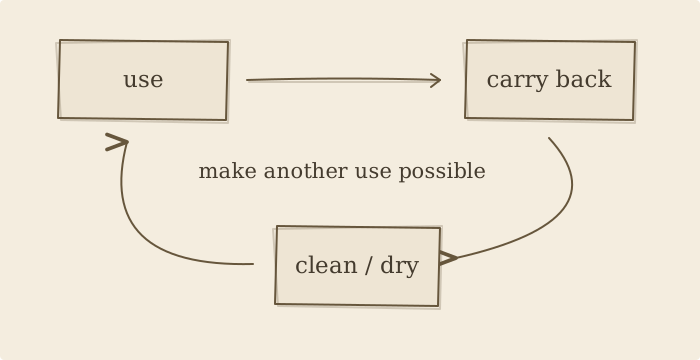
The first use is half the story. Carrying, cleaning, drying, and remembering create the next use.
Start after the useful moment
A reusable straw, bag, or cloth is easiest to picture while doing its job. The design becomes more revealing immediately afterward. Where does the used item go? Who cleans it? Where does it dry? How does it get back to the place where it will be needed? Treat those questions as part of the object’s brief.
Compare recovery paths
FinalStraw’s catalog entry includes a folding straw and a case. Stasher is described as a reusable silicone bag. Marley’s Monsters is represented by a cloth-roll format. The objects differ, but each needs a return path. A carrying case can contain a used object while also adding a component to maintain. A roll can make clean cloths available while leaving the used-cloth destination unresolved. These are scenarios to investigate, not observations from testing.
Make the next use visible
Draw a map of the home, office, or bag where the object will live. Mark clean storage and used storage separately. If they are in different places, identify who carries the item between them. If several people share the object, the handoff needs to work without one person silently managing the entire loop. A missing handoff often appears only after the initial purchase.
Keep impact claims separate
Reuse is a behavior, not a count guaranteed by the word “reusable.” Material quantity, cleaning, lifespan, and disposal all matter to an environmental comparison. No break-even number is calculated here. The practical design test is whether the object and its surroundings make another use easy to initiate. A well-described return trip is more informative than an unlimited-use promise.
Objects referenced
- FinalStraw · FinalStrawCollapsible straw + keychain case. Brand reference · Catalog record
- Stasher · Stasher BagsSelf-sealing platinum silicone bag. Brand reference · Catalog record
- Marley's Monsters · UNpaper TowelsReusable cloth roll. Brand reference · Catalog record
Method: AI-assisted desk analysis of the dated Creative DTC catalog, not hands-on testing. Product formats are attributed to the linked records and brand references; interpretations and sketch prompts are editorial. Brand pages may change. Price, availability, performance, compatibility, and impact are not verified here.
Explore the reuse collection